 Lead primarily by our host Andrés Hincapié, the goal of our “Were You Listening?” series is to facilitate an understanding of the songs we love to dance and listen to, and also to highlight that these songs have been talking about the beauty and the perils of being Black in the Americas for a long time.
Were You Listening? episodes have featured artists including Groupo Niche, Celia Cruz, Ismael Rivera, ChoQuibTown and MORE. Source material for the development of Were You Listening? episodes can be found here.
EPISODES
 Were You Listening? Track 26: Negra (English)
“They called me negra, I don’t give a damn!” In this episode we analyze the song ‘Negra’ interpreted by Soluna. In Negra, Soluna mocks the mocker as she puts it. She uses a catchy rhythm to jokingly sing and rap about moronic, dim-witted, obtuse and unintelligent people who mock and disrespect blackness.
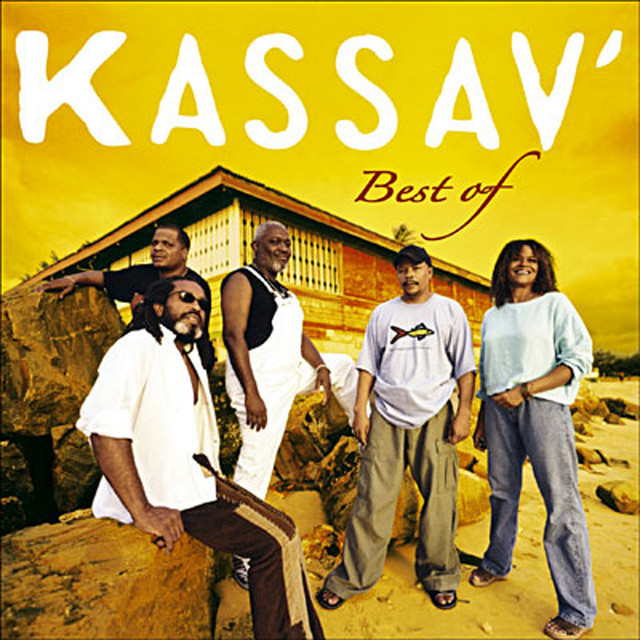
Today we explore the classic zouk song Zouk-La Sé Sel Médikaman Nou Ni (Zouk Is The Only Medicine We Have) by the famous band Kassav’, creators of the zouk rhythm. We are joined in our exploration by one of the founding members of Kassav’, the great Pierre-Édouard Décimus! With an infectious, catchy sound, and with simple lyrics that speak to their Caribbean creole reality, Kassav’ produces an internationally successful song that is unquestionably identified with the Antilles.
 Were You Listening? Track 24: La Llevo en Mis Venas/ Bambulé a Paré – (ENGLISH)
Today we explore a medley of two bomba songs, La Llevo en Mis Venas (I Carry It in My Veins) and Bambulé a Paré (The Bámbula Is Happening) by the group Tambuyé @tallertambuye. To help us contextualize the songs we interviewed the the Manager and Director of Taller Tambuyé, Marién Torres López. Marién and the artists of Tambuyé reaffirm in this medley the Black heritage present in the practice of Puerto Rican bomba in all of its wonderful dimensions, music-related, dance-related, healing-related, you name it.
 Were You Listening? Track 23: Color de Mi Raza (ENGLISH)
Today we celebrate Black History Month with this conversation with the Afro-Puerto Rican singer and song-writer Alondra Marie Ortiz Rivera of the bomba music group AFRIKTAAL. We contextualize the song Color de Mi Raza, which she wrote and sings. Color de Mi Raza is a beautiful message of reaffirmation of our blackness, questioning the ways in which society tries to hide our blackness, to make it opaque, and to diminish its value. Were we listening? This episode accompanies the episode Tócame La Bomba / Play Bomba To Me of the second season of our podcast devoted to the evolution of the bomba rhythm in Puerto Rico, check it out! We have some great guests! We hope this track helps to add value to your listening and awareness in your dancing!
 Were you Listening? Track 22: Censurarme (English)
In Censurarme Eddie Dee Eddie Dee confronts racial and classist prejudices and the moralistic hypocrisy of political and social figures who try to censor rappers and reggaetón singers for what they consider vulgar topics and foul language while at the same time engaging in despicable crimes and abject corruption. Our guest host is Dr. Beth Colón Pizzini, who contextualizes the song and talks to us about a variety of topics including censorship, the role of rappers in the development of reggaetón, and the political hypocrisies in Puerto Rico.
 Were you Listening? Track 20: Loíza (English)
Loíza, is part of Tego Calderón’s extremely successful debut album, El Abayarde. In Loíza Tego mixes an assortment of modern beats with bomba, and topples the mixture with his signature sharp lyrics which in this case criticize the way in which politicians, law enforcement, government officials, and wealthy individuals in Puerto Rico discriminate and exclude the town of Loíza, a town heavily populated by Afro-Puerto Ricans. In this episode we team with up with Dr. Beth Colón-Pizzini to contextualize Loíza. Beth is an Assistant Professor of Instruction at the University of Texas at Austin 🏫 @utaustintx in the African and African Diaspora Studies Department.
 Were you Listening? Track 19: Palenquero (English)
In Palenquero (Palenque Man), singer and songwriter Nelda Piña pays homage to the town of San Basilio de Palenque – its music, its cultural influence, and its deep Black roots. In this episode Nelda Piña herself reflects on the song she wrote and Matilde Herrera, instructor of Colombian folkloric dances with more than 50 years of experience provides context about Palenque history and culture.
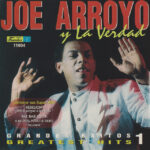 Were you Listening? Track 18: Rebelión (English)
In Rebelión, Joe Arroyo’s most famous song, El Joe take us from the nameless sorrow of slavery in general, to the specific pain and ultimate rebellion of a black, enslaved man sparked by the desire to protect his partner.
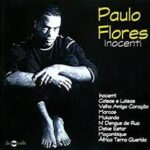 Were you Listening? Track 17: África Terra Querida (English)
In África Terra Querida (Africa Beloved Motherland) singer and songwriter Paulo Flores displays his poetic lyricism with a candid, melancholic description of various situations that depict life in the African continent and in Angola in particular, ranging from the relationship with elders, to interactions between neighbors, to the extremely popular game of soccer, the sport of the masses.
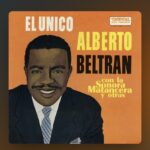 Were you Listening? Track 16: El Negrito del Batey (English)
El Negrito del Batey (The Black Man from the Batey) composed by Hector J. Díaz and Medardo Guzmán, in the voice of Alberto Beltrán with La Sonora Matancera, is a signature merengue song that many people in Latin America easily recognize. The song presents us with an intoxicating combination of rhythm and lyrics, which appear to walk right into the trap of stereotyping black people only to later throw the stereotype out of the window. That’s why it’s perfect for our Were You Listening series for its subtle and not so subtle message.
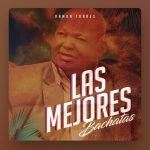 Were you Listening? Track 15: Caribe Soy
Among the many bachata songs expressing some version of national pride, Caribe Soy is one of the only ones that uses the formula of national or regional pride while also explicitly recognizing the African roots of the region and the inequalities across racial lines. Ramón Torres is one of the few bachateros who go beyond lyrics of love and heartbreak introducing in his lyrics reflections addressing social issues. In Caribe Soy, Ramón Torres does not blindly buy into the miscegenation myth. Instead, the song recognizes the hardship of the African and native peoples, breaking the romanticized notion of an ideal, somehow superior mix.
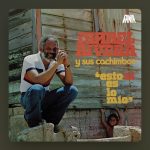 Were You Listening? Track 14: Las Caras Lindas De Mi Gente Negra
In Las Caras Lindas De Mi Gente Negra (The Beautiful Faces Of My Black People) Ismael Rivera interprets Tite Curet Alonso’s ode of love to black people, masterfully injecting his brilliant soneo. The main two ingredients in Tite Curet’s ode are the obvious, intrinsic joy and beauty of black people, and the sorrow that has accompanied blackness in the Americas.
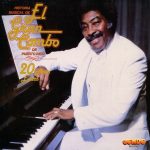 Were You Listening? Track 13: Ojos Chinos
In Ojos Chinos by El Gran Combo we see an oscillation between appreciation and mockery of Asian and Asian-Hispanic people. The song both professes abounding, overflowing love for a Chinese muse and also creates a racialized stereotype of Asian people with exaggerated fake Chinese accents, references to Asian food items, and poor emulations of Chinese instruments.
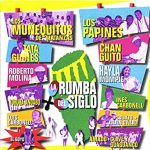 Were You Listening? Track 12: Elogio a Nieves Fresneda
In Elogio a Nieves Fresneda, El Goyo Hernández constructs a eulogy to Nieves Fresneda, an icon of Afro-Cuban folklore, based on the myriad of instruments and rhythms that exist in Afro-Cuban folklore. Both El Goyo and Nieves were founding members of Cuba’s National Folkloric Ensemble (Conjunto Folklórico Nacional de Cuba).
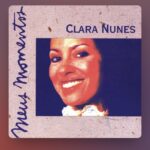 Were You Listening? Track 11: Canto das Três Raças
In Canto das Três Raças, Clara Nunes, with her deep ties to popular Brazilian music, becomes the perfect interpreter for a song that unveils the sorrow hidden in plain sight in the sounds of Brazil.
 Were You Listening? Track 10: Herencia Africana
In Herencia Africana, Yuri Buenaventura reveals a strong connection with and awareness of the African roots of the culture of the Pacific coast of Colombia, where he was born and grew up. Yuri was requested by our listener Carmen Dence in St. Louis, MO.
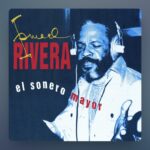 Were You Listening? Track 9: El Negro Bembón
Ismael (Maelo) Rivera often sung about Blackness and racism. In this song, through his captivating storytelling style of soneo, Maelo tells a story as old as time – anti-blackness and the hate crimes associated with it.
 Were You Listening? Track 8: Salsa Y Choke
Even though ChocQuibTown is a hip-hop band, in “Salsa y Choke” they experiment with a different, more recent rhythm called “salsa choke” which was molded in the Pacific coast of Colombia, a majority Black region, by mixing elements from all over the continent.
 Were You Listening? [Remix] Track 7: La Quiero Negra
This track’s song is “La Quiero Negra” by Joe Arroyo. This hidden gem doesn’t focus on the Black woman’s body. Instead, it presents the Black woman as a human being, victim of discrimination, but most importantly, her own beacon of virtue and wisdom.
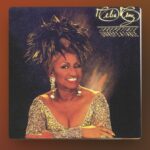 Were You Listening? [Remix] Track 6: Bembelequa
This track’s song is “Bembelequa” by Celia Cruz. It’s easy to be so captivated by Celia’s unique voice, tongue twisting phrases, and the rhythms of the band, that we forget to stop and listen to the story she seeks to tell. Who is Bembelequa?
 Were You Listening? [Remix] Track 5: Esto te Pone la Cabeza Mala
In track 5 of Were You Listening? we analyze the song Esto Te Pone La Cabeza Mala by Juan Formell y Los Van Van. In “Esto Te Pone La Cabeza Mala” Juan Formell presents a prime example of the approach with which he and Los Van Van create music: by fusing, mixing and creating a multitude of rhythms, an outstanding example of Cuban timba. Two wonderful practitioners of Cuban popular dances help us contextualize this song: Oesa and Cokie, two of the founders of Palenke Cuban Dance
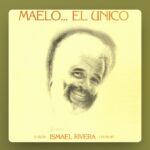 Were You Listening? [Remix]Track 4: Mi Negrita Me Espera
In track 4 of Were You Listening? we analyze the song Mi Negrita Me Espera interpreted by Ismael “Maelo” Rivera and adapted by pianist and composer Carlos Suarez. In Mi Negrita Me Espera, Maelo sings exquisitely about a mundane peer-pressure situation. He presents the conundrum of a Black man who wants to both, honor and respect his partner, a Black woman, but who also would like to party along with his friends. What does he do in the end?
 Were You Listening? [Remix] Track 3: Buenaventura y Caney
In track 3 of Were You Listening? we analyze the song Buenaventura y Caney by Jairo Varela interpreted by Grupo Niche. Buenaventura y Caney is an ode of love to the city of Buenaventura, a city in the Pacific coast of Colombia whose population has been for many years majority Afro-descendent, 85% as of the 2018 census.
 Were You Listening? [Remix]Track 2: Bemba Colorá
In track 2 of Were You Listening? we analyze the song Bemba Colorá by José Claro Fúmero in the incredible voice of Celia Cruz. If you’re a salsa dancer, you’ve probably danced or performed to this song at some point. We certainly have. But have you stopped to think about its meaning? This is exactly what our friend and former guest Lauren Wilmore , a dancer and the owner of Made By Lala, asked us. This episode is our answer to her inquiry regarding this very famous song. In Bemba Colorá, José Claro Fúmero writes, and Celia sings, about the worthlessness of a Black man due to the fact that he has a bemba colorá. Now, what is a bemba colorá or what does it imply? We’ll have to dig a little.
 Were You Listening? [Remix] Track 1: Raza
We started the Were You Listening series with the song Raza because it was sparked by the tragic events (George Floyd’s killing in 2020) that also sparked our own desire to honor and highlight the contributions of Black people to the Afro-Latin and Afro-Caribbean music and dances we love. In Raza, Alexander poses a series of basic questions that shake us strongly due to their simplicity and veracity. Alexander asks, why is there still racism even though we are the same in our capacity as human beings? Who hasn’t spent countless hours pondering in frustration about the answer to this question? Were we listening?
 The Mix(ed)tape Podcast